
In-hold stacker
Mason
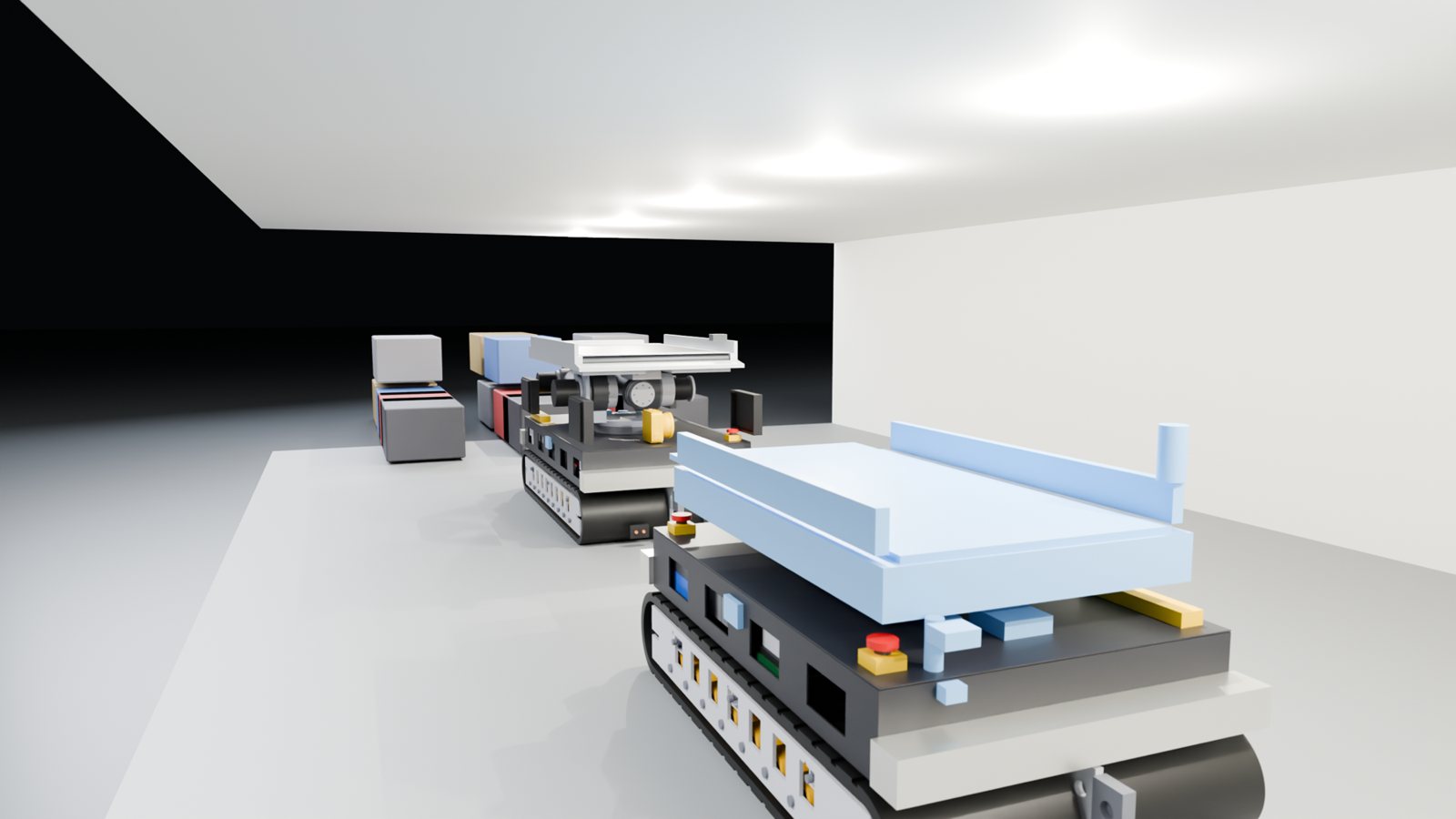
Mason drives deeper into the hold on tracks, clamps itself to the floor with vacuum feet, and builds the bag wall with a five-joint arm and a conveyor tray. Bags slide on and slide off, rather than being lifted by suction.

HoldSafe Robotics
Robots that move baggage inside narrow-body aircraft cargo holds, so ramp crews don't have to crawl, kneel and lift in a space about 3½ feet tall. Built to work with the belt loaders airlines already run, unchanged.
Patent PendingNarrow-body, 737-class holds

The problem
On a narrow-body, 737-class aircraft, checked bags travel loose in the lower holds. A belt loader brings them to the cargo door, but then a person has to climb in, lift, turn and stack every bag, and do it all again in reverse at the next airport.
Approximate dimensions of the forward hold of a narrow-body, 737-class aircraft. Crews work on their knees under that ceiling.
Work-related musculoskeletal disorder claims per 1,000 full-time workers: Washington airline ground crews versus the statewide average for all industries. More than ten times higher.
Source: Washington State Dept. of Labor & Industries, “Scheduled Airline Ground Crew: Ergonomics Priority for Prevention,” fact sheet FY24-576 (May 2024). Compensable claims, risk class 6802.
The L&I fact sheet lists “lifting heavy bags in the bin of an airplane” and “on my knees throwing heavy objects” among its example injury descriptions. The hold is where that exposure lives.
The solution
HoldSafe takes over the stacking. A pair of small tracked robots works inside the hold while the crew supervises from outside, and a dock vehicle carries them to the aircraft.
In-hold stacker
Mason drives deeper into the hold on tracks, clamps itself to the floor with vacuum feet, and builds the bag wall with a five-joint arm and a conveyor tray. Bags slide on and slide off, rather than being lifted by suction.

Door robot
Porter sits just inside the cargo door, receives each bag from the belt loader on a self-aligning conveyor, and passes it inward to Mason. Depth sensing helps it centre on the belt without markers on the loader.

Dock vehicle
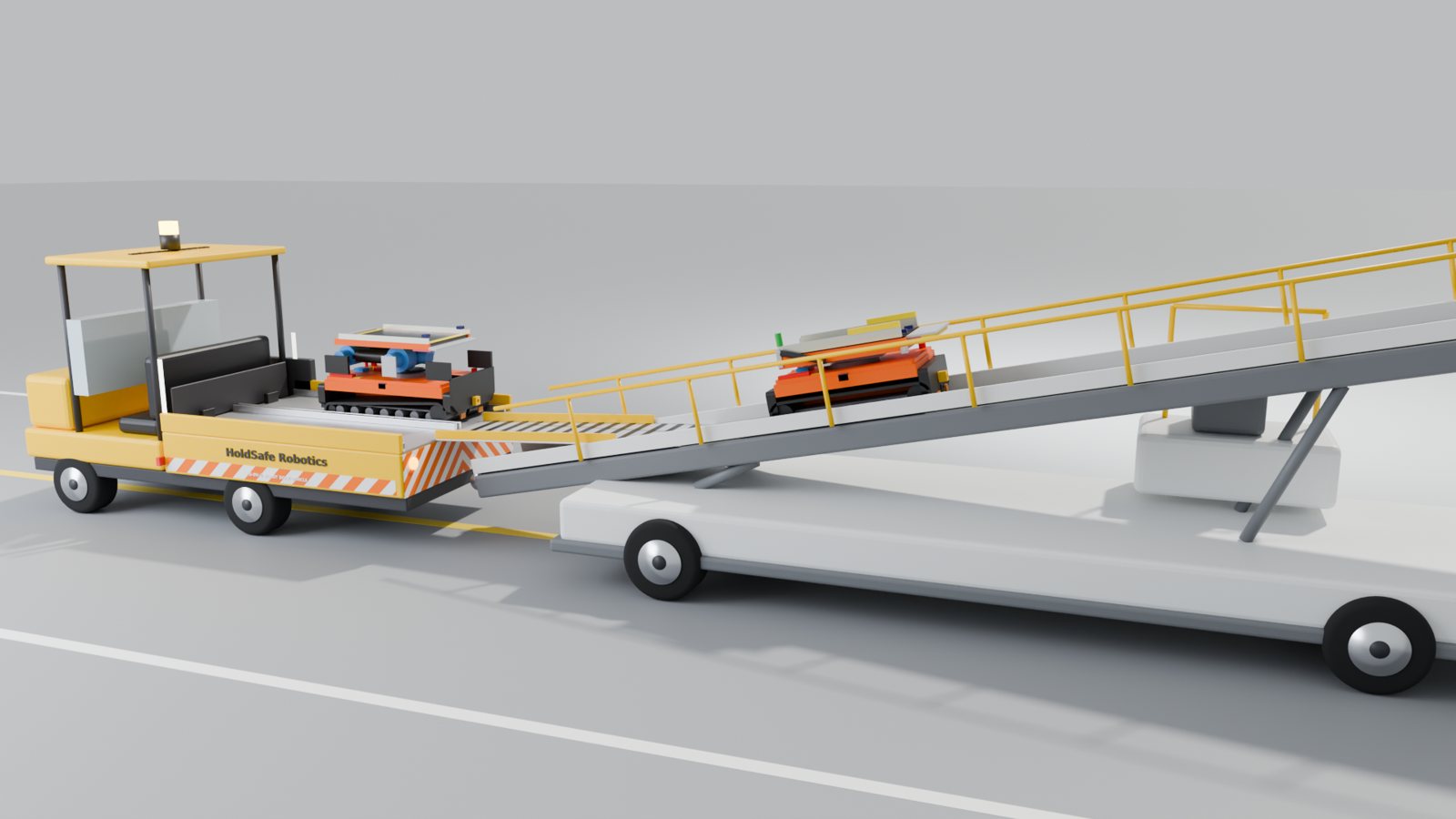
HoldSafe Haven is the home of Porter and Mason. It parks tail-to-tail with the belt loader, gives the robots a ramp onto the loader, and carries and charges them between flights.
All images are concept renders of the current design. No hardware has been built yet.
How it works
The Haven parks tail-to-tail with the airline's existing belt loader. Its ramp rests on the stopped belt.
Porter and Mason drive up the ramp, along the belt and into the hold on their own. Mason goes in first carrying a portable sill bridge and places it across the cargo-door sill.
The crew sets the loader to its normal loading position. Bags come up the belt, Porter receives each one and passes it to Mason, and Mason places it in the stack.
When the hold is full the robots back out to the Haven, where they recharge. Unloading runs in reverse.
The crew uses tablet guidance at the dock to prompt each setting. The robots work autonomously; the crew supervises and can pause or stop them, but nobody drives them.
Safety & compatibility
HoldSafe is designed to slot into the way ramps already work, with nothing to certify on the airframe and nothing to retrofit on the loader.
The robots run on the flat centre floor of the hold. Nothing is fixed to or modified on the airframe.
No clamp, target, paint, wiring or software change on the belt loader. Haven does the docking, not the loader.
The crew supervises from outside the hold and can pause or stop the robots at any time.
Scanners, emergency stops, bumpers, a rescue handle and interlocks are part of the design.
Robots are about 580 mm (23 in) wide and designed to fit through a narrow-body, 737-class cargo door when stowed, as checked in CAD.
Door clearance, ramp slopes and the loader hand-off sequence have been checked in design models. Physical testing is still ahead.
HoldSafe is at the design stage. Safety features described here are design features; testing and any regulatory or airline approvals are still ahead.
Team & about
HoldSafe Robotics is an early-stage company developing in-hold baggage robots for narrow-body aircraft. We're working toward a first prototype.
The goal is simple: take the kneeling, lifting and crawling out of the hold and keep skilled people in charge of the work.
Contact
We'd like to hear from ramp crews, ground operations teams, belt-loader makers and anyone interested in safer baggage handling.
Phone: +1 425.381.7029
Email opens your email app. Tell us who you are and what station or fleet you work with.